Paid Shopify Themes vs Horizon: What You Actually Buy in 2026
A comparison of paid Shopify themes against Horizon in 2026, with the five criteria that actually decide the purchase.
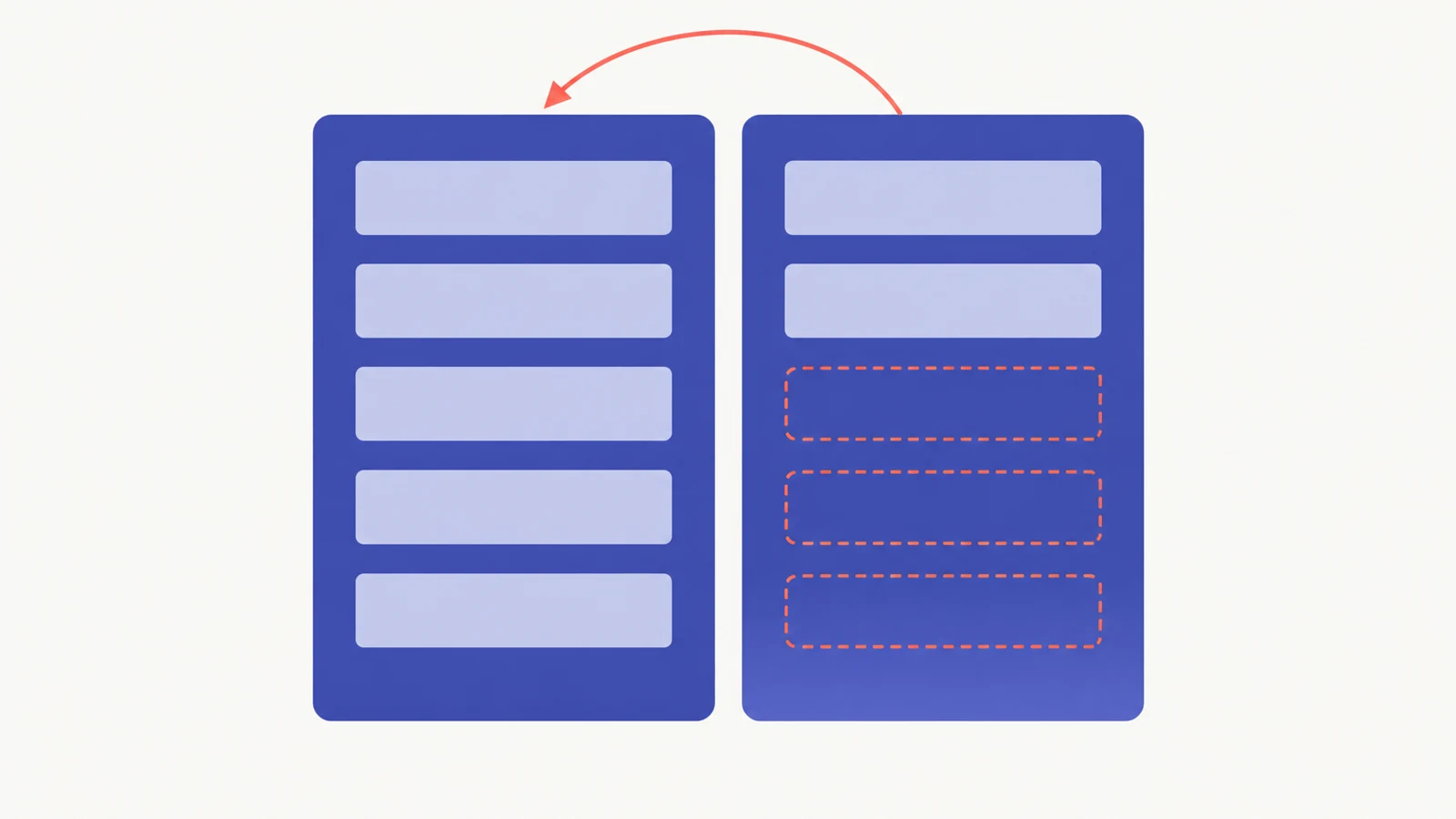
Quick answer: Most solo merchants should start on Horizon and only buy a paid theme when they can name three or four specific layout or merchandising shapes Horizon cannot produce. The block-flexibility advantage flipped to the free side in 2026, and vendor health is now the biggest hidden risk when you do decide to buy.
There are 1,287 paid themes on the Shopify Theme Store. As of October 2026, two of them - Metro and Gario - match Horizon on block flexibility, and neither includes a general "Group" container block the way Horizon does. That is the number that reset my default advice this year.
For about three years I told merchants to spend the $300-400 on a paid theme if they could afford it. The reasoning was simple. Free themes shipped as skeletons; paid themes shipped with the sections and merchandising features you were otherwise going to pay apps to replicate. The math worked out. Then Horizon landed, Shopify started shipping into it instead of into Dawn or the paid-theme ecosystem, and the math stopped working.
For about two years I was wrong about this. I was wrong because the data had changed under me and I was still answering with the 2023 version of the question. This post is my current frame for the choice, worked through the five axes that actually move the decision in late 2026. That verdict is narrower than "always use free," and more specific.
Here is the one-screen view before the detail:
| Axis | Horizon (free) | Typical paid theme ($300-400) |
|---|---|---|
| Block flexibility | Native block-first; "Group" container, nested blocks | 2 of 1,287 match; most predate the block system |
| Native merchandising sections | Mega menu, metafield sections, quick-add modal | Varies; often includes editorial layouts, promo tiles, hotspot images |
| Setup time to a presentable store | A few hours with templates | Often an hour or two faster; demos ship closer to done |
| App-stack reduction | Horizon absorbs search, filters, basic page-building | Feature-rich themes replace 3-5 app subscriptions |
| Vendor update cadence | Shopify-maintained, continuous | Varies; ~15% of Theme Store themes went 6+ months without an update in 2026 |
| Canvas compatibility | Supported | Not supported at launch |
| 12-month cost | $0 | $300-400 one-time plus implicit vendor risk |
The rest of this post walks each row.
Block flexibility, side by side
For most of 2023-2024 the paid-theme pitch was "we give you more layout control." That claim died on October 9, 2026, when Michael_Dragich, a Shopify Partner and ten-year Plus Expert, published his analysis of the paid-theme market in Shopify Community thread 579008. Of 1,287 paid themes, only 292 shipped with three or more presets. Only Metro included a general "Group" container block equivalent to the one Horizon ships natively. Gario was close. Everything else was architecturally behind the free theme.
If "my paid theme will give me more layout freedom" was the reason you were about to spend $350, you are probably buying the opposite. Dragich put it plainly in the same thread: "every free theme listed after 'Horizon' is just a preset of 'Horizon'." The variants you see on the Theme Store free tab are not alternatives to Horizon; they are Horizon with a different hero image.
A compressed version of his finding:
| Theme | Horizon-style block system? | General container block? |
|---|---|---|
| Horizon (free) | Yes, native | Yes ("Group") |
| Metro (paid) | Yes | Yes |
| Gario (paid) | Partial | No, but closest |
| Other ~1,285 paid themes | Limited or none | No |
This is the single finding that reset my default advice. For three years, "paid themes have more flexibility" was a safe claim. In November 2026 it is wrong for roughly 99.8% of the paid Shopify themes you can buy. If flexibility is why you are shopping, you are shopping in the wrong direction.
I have not personally tested each of those 1,287 themes. The number comes from Dragich's Claude-generated analysis of the Theme Store catalog, which the thread participants cross-checked against their own experience. The directional claim - that the gap is huge, and that only Metro and Gario close it - is defensible. The exact count may be off by a handful.
What a paid theme still gets you
A real category of thing a paid theme buys you still exists, and I want to describe it precisely so this does not slide into "always free." Three columns hold up.
First: specific merchandising sections that Horizon does not ship. Hotspot images that link product tags inside a lifestyle photo. Countdown timers with pre-built promo copy. Editorial full-bleed layouts tuned for a category - furniture visualizers, apparel multi-color swatch grids, lookbooks for lifestyle brands. Horizon can be bent into these shapes with developer time or with Canvas, but a paid theme ships them as drag-and-drop blocks on day one.
Second: aesthetic baseline. The "dropshipper look" phrase that circulates in the r/shopify threads is pointing at something real. A free theme ships with the typographic register, spacing, and photographic density that a merchant without a visual language will accept, which is often below what a paying customer in fashion, beauty, or branded goods expects. The paid theme has already made the small decisions - letter spacing on headers, section padding, how a "sold out" badge sits on a product card - that a first-time merchant will not make well.
Third: time. DanielAnderson in the August 2026 Shopify Community thread about Dawn's rating problem got this right: "what a paid theme actually sells you is usually time, not conversion." If thirty hours of layout work costs you more than $350 in opportunity cost, the paid theme is the correct purchase even if its block system trails Horizon.
Nothing in that list reads as "feature parity." Horizon has mostly closed the feature gap. The paid Shopify themes pitch in 2026 narrows to aesthetic time-saving plus a few specific merchandising shapes.
The real cost over 12 months
The sticker price on a paid theme is $300-400 one-time, with occasional Theme Store discounts to $100-ish. That is the number merchants compare against zero when they weigh the decision. It is the wrong number.
The right comparison runs four lines over 12 months:
| Line item | Horizon (free) | Feature-rich paid theme | Basic paid theme |
|---|---|---|---|
| Theme license | $0 | $350 one-time | $300 one-time |
| App subscriptions it replaces | Horizon absorbs search, filters, basic page builder | 3-5 subscriptions, roughly $30-100/mo | 0-1 subscriptions |
| Hours to a presentable store (your time or hired) | 10-30 hours | 2-10 hours | 2-10 hours |
| Vendor support value if you hit a bug | Shopify's own, variable response time | 2-business-day SLA, if vendor still invests | Same, if vendor still invests |
A merchant who was already going to install Searchanise, a page builder like PageFly, and a promo-banner app often finds that a feature-rich paid theme pays for itself in three or four months. Net_Shop made this exact point in the September 2026 r/shopify "What actually makes a paid shopify theme worth the extra money?" thread. For a merchant who was happy with Horizon's native search and filters and had no app bill to displace, the paid theme is pure cost.
The question is "which planned app subscriptions does this theme eliminate?" If the answer is zero, Horizon. If the answer is three apps at $25/month each, the paid theme is cheaper by month six.
Vendor health is now a buyable attribute
This is the axis most theme comparisons skip, and it is the one that has moved hardest in the last six months.
On August 27, 2026, Shopify silently changed the "Discover themes" area in admin for new merchants. The old "Explore more themes" link went away. In its place, a free Dwell preset. The main entry point into the paid Theme Store for new merchants shrank to a smaller "Visit Theme Store" button. Three weeks later, theme developers started posting about it on community.shopify.dev in thread 37670. Liam_Sarsfield wrote that his team laid off fifteen people. SafeAsMilk said their team had downsized. Opal wrote that her team was making "hard decisions about staffing" and would stop investing beyond required fixes and the Partner-terms SLA. None of these developers reported any Shopify Staff response in the thread.
Then on October 1, Shopify launched Canvas, a chat-driven AI design tool that works on Horizon and the other free Shopify themes but, per Shopify's own announcement, has "not yet full backwards compatibility with 3P themes." Two days after that, a developer named nonamen reported three consecutive days of $0 Theme Store revenue despite the theme ranking on page one for Relevance.
The structural implication for anyone buying paid Shopify themes in November 2026: you are buying from an ecosystem under revenue pressure from Shopify itself. SUL raised it directly in thread 37670 - when a theme developer winds down investment, their existing merchant customers lose ongoing support and updates. The theme keeps working; the vendor relationship behind it quietly ends. Shopify is tracking the revenue data, per Sarsfield, but has not publicly communicated any plan to reverse it.
What this means for the purchase decision is small and specific: check the theme's update history before buying. If the last update was 6+ months ago, treat that as a soft red flag. Approximately 15% of Theme Store listings fit that profile per the September 2026 developer thread. The check takes thirty seconds in the Theme Store listing's update log. It is the cheapest due diligence available in this category and almost nobody does it.
The Canvas problem
Canvas is the AI design workspace Shopify shipped on October 1, 2026. You describe a layout in plain language, Sidekick generates it, and the result is applied to your theme. For solo merchants who cannot code and do not want to pay a developer, Canvas is likely the most consequential Shopify product release since checkout extensions. Shopify quoted 25 million theme edits made by Sidekick in the first half of 2026 as the context for building it. The direction of travel is obvious.
Canvas only works, at launch, on Horizon and the other Shopify-built free themes.
The exact phrasing in Jordan_Graham's October 1 announcement: Canvas is "not yet fully backwards compatible with 3P themes." The "not yet" leaves the door open, and Shopify has said it is "deeply considering the role of the theme store in this new world." I would not plan a store around the assumption that door closes quickly. I would also not plan one around the assumption that it stays open on your preferred timeline.
The practical rule for 2026 buyers: if AI-assisted design is in your plan, you need a theme Canvas can edit. Right now that means a free Shopify-built theme. A paid Theme Store purchase locks you out of a tool Shopify is actively promoting as the main way merchants design their stores going forward. You give up Canvas access for the next 18 months of rollout, and that is a bigger cost than the $350.
If you want someone else to read your theme setup and tell you whether a paid theme or Canvas is the right next step, the first 15 minutes with a help1 expert is free and that is usually plenty for this specific question. We have run the comparison enough times to get to an answer in a single chat.
What I would actually pick in 2026
A decision framework I give merchants on help1's chat, and the one I would use for my own store:
- Start on Horizon. Build a working, decent-looking store. Measure a month of real traffic. Resist the pull to buy anything in week one.
- Make a list of what Horizon cannot do, as concretely as you can - the three or four specific sections you need that it does not ship. DanielAnderson's framing in community thread 662192: "the business case only exists if you can name the three or four things you'd build."
- Price each item. A hotspot image section as an app is roughly $15/month. A countdown timer app is roughly $10/month. An editorial magazine layout from a developer is a one-time $200-500. Add them up over 12 months.
- If the sum is less than $350, buy the apps. If it is more, buy the specific theme that already ships the sections you listed, and only that theme.
- If AI-assisted design is in your plan, do not buy paid Shopify themes right now. Canvas does not support them yet, and you lose that advantage.
- If you do buy a paid theme, check its update history first. No updates in 6+ months is a soft red flag. Not fatal; it just means budget for the possibility that vendor support thins out.
When this call goes well on help1's chat, the merchant can already name the specific missing shape before they open the Theme Store. When it goes badly, the merchant has bought because "free themes look cheap," and three months in they are emailing me asking why their $350 theme still does not look like the brand they had in their head. That is a design-system problem; a theme does not fix it.
If you are already on Horizon and the problem is customization that keeps breaking on updates, the five Horizon customization habits that break are the ones to check before you blame the theme.
Here is the short version. Open your current store in a new tab, open the Horizon demo at theme-horizon.myshopify.com in another, and list every section on your current store that you cannot build with a Horizon equivalent. If the list is empty, you have your answer. If the list is three items long, price each as an app and as a one-time developer task. If the list is seven items long and specific to your category - furniture, apparel with complex swatches, a brand with a strong editorial register - that is a genuine paid-theme need, and the next step is to filter the Theme Store by last-updated date instead of by Relevance. Spend thirty seconds on each candidate theme's update log before you put anything in the cart.
Still stuck? Talk to an expert.
Our vetted Shopify experts can fix this issue for you in a live session. $39 per session. Your first 15 minutes are free.