Why You Can't Fix Shopify Checkout to Catch Wrong Addresses
You can't fix shopify checkout to catch a wrong address at entry. The real catches live downstream. Here's the honest shape of the problem.
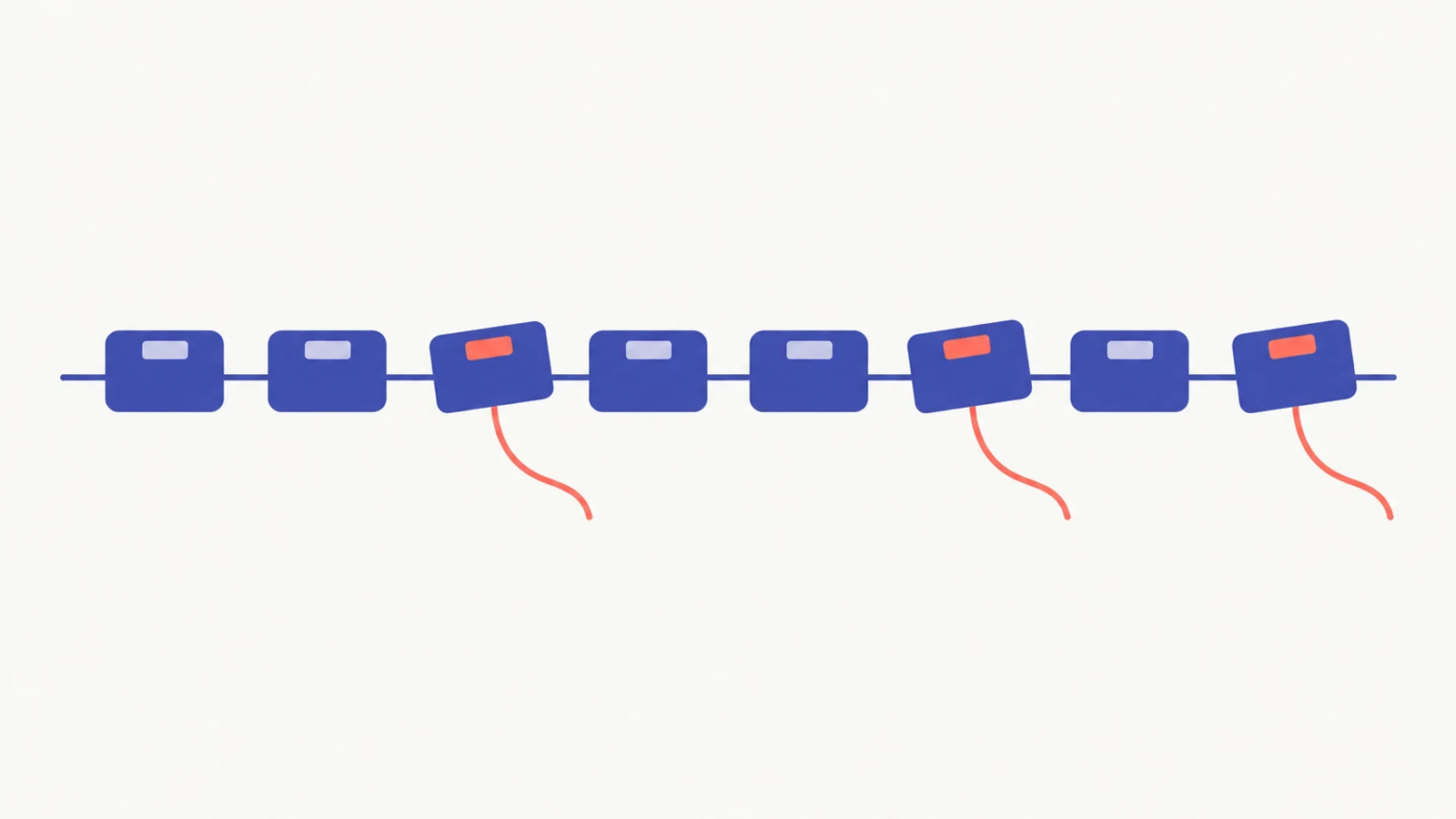
A florist posted on r/shopify in September. Eighty percent of their orders are same-day gift deliveries. In the stretch they wrote about, nine out of ten of those were shipping to the buyer, not the recipient. The customer typed the recipient address correctly. Then they clicked the email field, their browser's password manager fired, and the whole saved profile dropped on top of the shipping block. The question the florist asked, and that the Shopify Community has been asking for six years, was: how do you stop this inside checkout?
You can't. If you came here looking for a setting that would fix shopify checkout address entry, there is no such setting. Not a native one. Not even the June 2026 Checkout Blocks address format validation rule. The failure modes that eat gift stores and subscription stores every week are not formatting failures. They are substitution failures. No rule inside checkout can see them. The honest work is somewhere else.
Everyone wants a toggle at checkout
The appeal of a checkout-level fix is obvious. Checkout feels like the gate. Shopify's admin presents address validation as a toggle. Google Autocomplete is a toggle. The new Checkout Blocks rule is a toggle. The mental model that follows is natural: there must be a right combination of toggles that stops orders with wrong addresses from being created. If you have not found it yet, you have not looked hard enough.
One merchant on r/shopify put the mood plainly: "I'm kind of sick of Shopify not having this stuff native." The thread spent 43 comments trying to answer them, and the answers were all third-party apps. None of the comments pointed to a Shopify checkout setting that would have caught the problem, because none exists for the failure modes that thread was about. The surface is clean, which is why merchants keep going back to it looking for a lever that was never installed.
Why no toggle in checkout can see the real problem
Here is the pattern. The customer completes checkout. The order record shows an address. The address is correctly formatted. The order is captured, charged, and routed to fulfillment. The package goes somewhere it should not. The merchant finds out later, from the customer or from a stranger holding a package that is not theirs.
For any of the above to happen, the address that reaches the order record must have passed every format check Shopify applies. Which means the June 2026 Checkout Blocks address format validation would not have stopped it either. That rule rejects malformed addresses: missing house numbers, non-deliverable postal codes, structurally broken entries. It is a real and useful tool. It is also, by design, blind to the failure modes that actually produce the wrong-address orders you see in a gift-heavy store.
Walk through the failure modes with that constraint in mind. Browser autofill overwrites a recipient address with the buyer's saved profile. Both addresses are correctly formatted. Shopify's own validation layer changes "floor 2" to "apt 2" after the customer confirms the entry (reported by a Shopify merchant since 2017 in a February 2025 Community thread). Both the entered address and the altered one are correctly formatted. Google Autocomplete suggests "123 West High Street Ebensburg PA 15931" where USPS requires "123 W High St Ebensburg PA 15931-1538." Both are correctly formatted; only one makes it onto a label. Billing silently overrides shipping on some payment flows, with no consistent trigger a merchant has ever been able to pin down. Both addresses are, again, correctly formatted. The gift-checkout flow updates the customer's default address to the recipient without a confirmation step; the overwritten profile is also correctly formatted.
Five mechanisms. Five correctly formatted outputs. Every one of them produces an order the format-validation rule has to accept. The reason you can't fix shopify checkout at the entry point has nothing to do with Shopify forgetting a setting. The information needed to distinguish "customer typed this" from "autofill or validation substituted this" simply does not reach the checkout layer. The checkout only sees the final string. Any rule that lives at the checkout layer can only act on that string. The real divergence happens before and after.
A note on things that look like exceptions. The old Checkout Blocks Address Blocker was deprecated and sunsetted on August 31, 2026 in favor of the new Address format validation rule. Both operate on the same signal: structural compliance of the submitted address. Neither has visibility into whether the submitted string is what the customer actually typed.
The catches that work live outside checkout
If you can't fix shopify checkout at the submission layer, every real catch has to live on either side of it. The pre-checkout side is behavioral: a product-page or cart interrupt that forces a gift-buyer to acknowledge where the package is going before they are inside the browser-autofill blast radius. The post-checkout side is procedural: a human reads the label before the carrier takes the box. Neither is elegant. Both work.
The post-checkout catch is the one more merchants should be using. Shopify's own label software has, since at least 2021, substituted addresses it considers "more correct" during label purchase. Shopify support acknowledged this on the record in a 2021 Community thread and offered no refund to the merchant who first reported it. A follow-up report in 2022 described the same substitution hitting six packages at once. The February 2026 thread on persistent address rewriting (first opened in August 2024, still active today) added the detail that confirmation emails sometimes show the correct address and delivery emails show a different one. Which means the order record is not where the truth lives. The label is. If the label does not match the order record, you have thirty seconds to catch it, and you only catch it if someone looks.
In a florist or gift-heavy store, I would make the five-second label check a step on the packing bench, not a QA step done after the fact. It takes less time than peeling tape. If the printed label and the order record diverge, do not ship through Shopify Shipping for that order. Reprint through the carrier directly. Multiple merchants across multi-year Community threads converged on exactly this workflow after exhausting the native options. I used to argue that enabling Shopify's address validation on by default was obviously right. The merchants with non-standard addresses - floors, suites, rural routes, business addresses - have convinced me otherwise. Validation off, label check on, is the honest default for most of our audience.
A named tool worth knowing: Loqate, surfaced in a 2024 Shopify Community thread as the alternative when Google Autocomplete's suggestions diverge from USPS format. It adds friction and cost at checkout. For most solo stores the label check costs less. For a store crossing a thousand orders a month with mixed address types, Loqate starts to pay its freight.
If you are reading this and realizing none of this is in your current workflow, that is normal. Most of the merchants in the threads above only built the catches after the first bad delivery. The first fifteen minutes with a help1 expert is free and we have a saved walk-through for exactly this failure category. We cannot change what Shopify's label software does. We can help you decide what to turn off, what to catch where, and what to accept.
When the native tools are still worth enabling
The hot take is not that the native toggles are useless. It is that the native toggles solve a different problem than the one most merchants came in with. Enabling the format rule is a real fix shopify checkout actually ships. It just does not fix the thing that broke the florist's week. If you ship worldwide and get a steady drip of orders with missing postal codes or malformed international entries, the June 2026 address format validation rule is worth turning on. It will stop a real class of mistakes at the right moment, and the cost of turning it on is zero. If your store has migrated to New Customer Accounts, the April 2026 default-address change meaningfully reduces one of the compounding problems (where a gift order silently overwrote a customer's saved default). That migration is also worth doing. Our longer walk-through on the downstream mess, when a shipping address fix is not one click, covers the admin-side pain in detail.
Just do not treat either of those as the fix. They catch what they catch, which is not what you came looking for. The failure modes that actually cost merchants gift orders are still fully present after you enable both toggles.
If I had to pick one habit for a gift-heavy store running Shopify in late 2026, it would be the five-second label check before the carrier takes the box, not because it is elegant, but because it is the only step that sees every failure mode a checkout rule can't.
Still stuck? Talk to an expert.
Our vetted Shopify experts can fix this issue for you in a live session. $39 per session. Your first 15 minutes are free.